

David Taylor
Another year gone by; another year of joy and sadness, good and bad news, encouragement and uncertainty. Somewhat connected to the slings and arrows of life in 2025, it’s also been another 365 consecutive days of Sheffield United taking up at least some of our brainpower.
2025 marks the fourth year in which The Pinch has been publishing (and paying) independent Blades voices. What started out as DEM Blades fanzine has continued into the digital era as a love letter to a beautiful, beguiling, infuriating football club. We continue to be amazed at the enthusiasm and talent the fanbase is full of, with our stable of writers bigger than ever and the topics covered ranging from fun recollections to serious analysis.
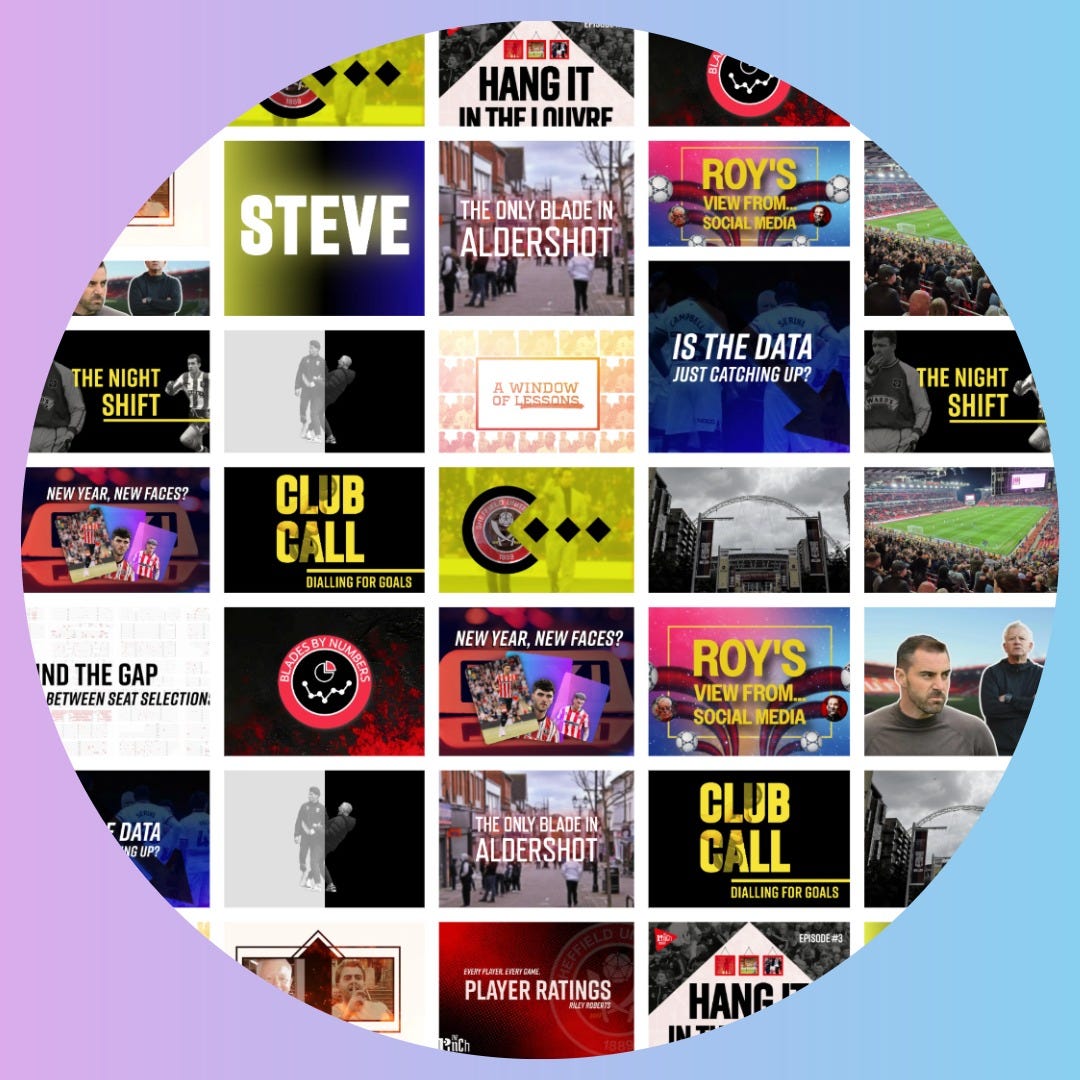
The end of the year is a handy time to look at where we’ve been and where we’re going, both as a club and as The Pinch. I’ve picked a few articles from throughout 2025 that I think show The Pinch in its best light – a place for devotees to share, reflect, agree and disagree; a site for thoughtful, non-digital-digital publishing in a world getting faster by the second.
It’s interesting to note where we started and finished the year, with pieces on ownership and money in football. Like press releases and the plates of recruitment teams across the country, the world keeps spinning.
That’s the magic of following a football club. It doesn’t matter where in the league Sheffield United sit, or if we manage to sign the player everyone has been dreaming of since a rumour appeared out of nowhere (looking at you, Lukas Podolski). To borrow from Wolves, another club currently feeling the sharp end of footballing fortune: this is our love, and it knows no division.
To everyone who has read and listened along with us this year and before, we can’t thank you enough. With any luck, we’ll keep writing, analysing and podcasting long into the future. But for now, here’s the year that was, 2025 edition.

We all sneer at clubs who have bought the League. But we’re desperate for someone to buy it for us. We all pontificate about the Premier League becoming a closed shop. But, hell or high water, we want someone to buy us into it before they pull up the drawbridge.
WAHAW. We’re all hypocrites aren’t we?
The year started strongly, with a reflection on the necessary evil of owners in football. Phil Rose, otherwise known as Ball Sup and founding member of the Carrier Bag Firm, used The Pinch as a sounding board for his feelings about United’s then-freshly-installed new owners, COH Sports, and wider ownership in football. It’s a thought-provoking read on selling your soul, the future of the club and why “the Prince is the best owner Sheffield United have never had.” It all feels pretty prescient.

Memory is a hazy thing at the best of times, so it was a relief to see that everyone’s favourite “View From” collator, Andrew Hague (AKA Roy), has as many doubts as we do about the past. From a Barnsley goalie throwing his cap on the ball during a Marcelo one-on-one, to Alan Bastardo, Roy delves into the cerebral vaults to ask, Do I remember this right?!

The win was consequential - not just for bragging rights, not just for a title race that Blades would be leading were it not for a two-point deduction, but for Wilder’s own legacy. When Rob Staton shoved a microphone under the manager’s chin, what followed was a potted history of how Sheffield United have turned the tables on our neighbours. Beneath it all, however, was a robust defence of that legacy and, most relevantly, an open question about this season: why don’t Sheffield United get the credit we deserve? Why are we written off more easily than others?
When the Blades beat our neighbours for the second time last season, much was said of Chris Wilder’s reaction. What many conversations missed, however, was why the reaction was so forthright. As United went top with a derby day win, it wasn’t just local dominance on the line, but support for the philosophy of a manager somewhat unfairly disregarded by football’s cognoscenti.

As England got ready to take on Latvia this week in their World Cup qualifying campaign, it came to my attention that this was the first-ever meeting between the two nations. Of course, my immediate reaction was that prior to 8pm on Monday 24th March 2025, Sheffield United had played more games of football against Latvia than England had.
Why did Sheffield United welcome the nation of Latvia to Bramall Lane in 2000? Why was Gary Johnson the manager of said nation? Which 2000s Blades legend made an appearance months before his league debut? Read Ben Meakin’s Latvian recollections to find out.

Celebrate good times, come on
Let’s celebrate
Kool and the Gang, Celebrate; 1980 – De Lite Records
We all have a favourite Blades celebration. Michael Doyle’s cockney walk after we beat West Ham on penalties is forever etched in my mind, but there are dozens of similar moments that fans will always fondly remember. David “Deadbat” Beeden rattled through his favourites, from Keith Edwards’ simple arms aloft and index fingers up, to a rather less-composed Paul Peschisolido.

I ask myself – does it matter? That we lost, no. That we could have won, yes. Are we unlucky? No. Are we lucky? No. Are we happy about it? No. Will we be happy again? Eventually. Should I be a football fan? Who knows.
Will I always be a Sheffield United fan? ‘Til I die.
In the aftermath of perhaps United’s most heartbreaking playoff loss, Jake Parry found a video on his phone of the moments after Harrison Burrows’ disallowed goal. Red flare fumes, erratic arms and heads and bodies, smiling eyes. It wasn’t to last, but that isn’t what loving a football club is about. Jake’s ode to being stuck with the elation and misery was a vital tonic on that particularly rubbish day and remains one now.

From a pundit’s perspective, clichés offer a shortcut, a way to speak without really saying anything. Why explain a tactical shift when you can just say “he gave 110 per cent”?
Where else would you find a writer employing George Orwell’s critique of cliché to analyse the tactical nous of the football world? Alex Westran put together a fantastic piece running through some of the game’s most loved/hated phrases, looking at the differences in language use between managers. It’s a fun read - even if the conclusion is still up in the air. We go again.

In the early 2000s, I helped myself – regularly – to my older brother’s VHS collection. And it’s not what you think.
I was obsessed by his collection of Sheffield United season review videos. Whether it was Marcelo celebrating by chucking his long-sleeved shirt into the crowd and revealing… another shirt underneath. Glyn Hodges’ confiding that he asked the ref to blow the whistle early in May ’94 and that he’d buy him a pint. David Holdsworth starting his United career with two own goals in two games.
How better to spend the early hours caring for a newborn than reliving Sheffield United’s nineties journey through the magic of VHS? As his daughter snoozes on his chest, Ewen Laycock powers up the tape machine and settles down to Winds of Change, a review of the less-than-great 1995/1996 season. It’s a calming look at a lifetime of fandom, distilled into a silent night of mid-nineties football.
“I should probably feel guilty for possibly passing on this part of my life to my little girl, but it’s probably too far gone already. In the last few nights, she’s dozed and dreamed from 1991 to 1996, not even waking up for the memorable paintball montage of 1992/1993.” Welcome to the Blades, young one.

Brooklyn is about 4,000 miles from Bramall Lane, but suddenly it feels an awful lot closer, bagels becoming butties for 90 minutes. You could argue, quite fairly, that it is mad to say having someone to reminisce with about Wayne Allison’s unerring ability to score via his arse is as important to my settling into a new country as housing and employment, but football is mad – so here we are.
A big Blade moves to the Big Apple and finds joy in a small – but growing – United community.

That was ClubCall: part lifeline, part lottery. A transitory medium, sitting somewhere between the certainty of classified results and the digital flood that was to come.
Before online ‘hot takes’ and less-than-accurate social media updates came ClubCall in all its delayed and imperfect glory. For Brendan Moffett, living in West London in the late 80s, it was a lifeline, keeping him in the loop with Blades results: “expensive, clunky, but utterly essential if you were following the team from afar in the 1980s and early ’90s.”

Popes and Panzers, war and Wednesday. Stefan “Steve” Bajdala’s remarkable life ends in the places we know: football terraces, barbershops and home. But it begins in a world we can barely imagine.
This is the story of how The Pinch came to be. It’s also much more than that, of course. The second, third and fourth-hand telling of a few moments in a life. Without Steve, there would be no Pinch, but the history of Sheffield would also have been much poorer. His life could fill the pages of a novel, but for now, we hope this does justice to the boy from Ukraine who became an integral part of the city’s fabric.

Patrick Bamford versus Christopher Wilder; the muppet from Leeds versus a self-love practitioner from Sheffield; versus no more! One of English football’s seemingly least-likely collaborations has come to pass.
We all thought there was no love lost between the former Leeds forward and United’s manager, with both outspoken in their own special ways and unlikely to retract what they’d said. Turns out, after a couple of phone calls, an expired contract, and a desperate need for something – anything – up front, Chris and Pat are best buds after all.
Everyone loves a good football feud. In the light of the burgeoning Wilder-Bamford bromance, I went through my favourite tiffs from the beautiful game, from Brian Clough and Don Revie to Mick McCarthy and Roy Keane’s Japanese fallout - soon to hit the big screen.

What has shifted the dial somewhat is that people do care when the privately owned Thames Water pumps turds into the sea, or when the privately owned energy companies record profits while people freeze in their homes, or when the privately owned rail companies cancel trains and hike ticket prices, or when the privately owned care-home firms extract dividends while understaffing wards, or when the privately owned bus companies scrap rural routes because they aren’t profitable, or when privately owned EVERYTHINGS borrow billions only to pay themselves bonuses instead of fixing stuff.
That’s the unsubtle difference between the free market generally and the free market in football terms. All things can be bought by the highest bidder in both. However, one of the reasons I love football is that it retains a canny and critical constituency. A loud, proud mob. Give them a name: fans.
Ending the year how we started, with a blazing piece on ownership, money and the balance between success and soul. What price are you willing to pay for football glory?
Thanks, David
What a great selection of the year’s memories. It’s been a good year all round for The Pinch and its contributors; and I’ve enjoyed all the varied and intricately researched articles over the year, singing the praises (or otherwise) of our “…beautiful, beguiling, infuriating football club.”
It’s always nice to have a recap – thanks for doing it so well.
Happy New Year to all,
Sue.