

Words: Matt Hodkin, The Sheffield United Hodcast
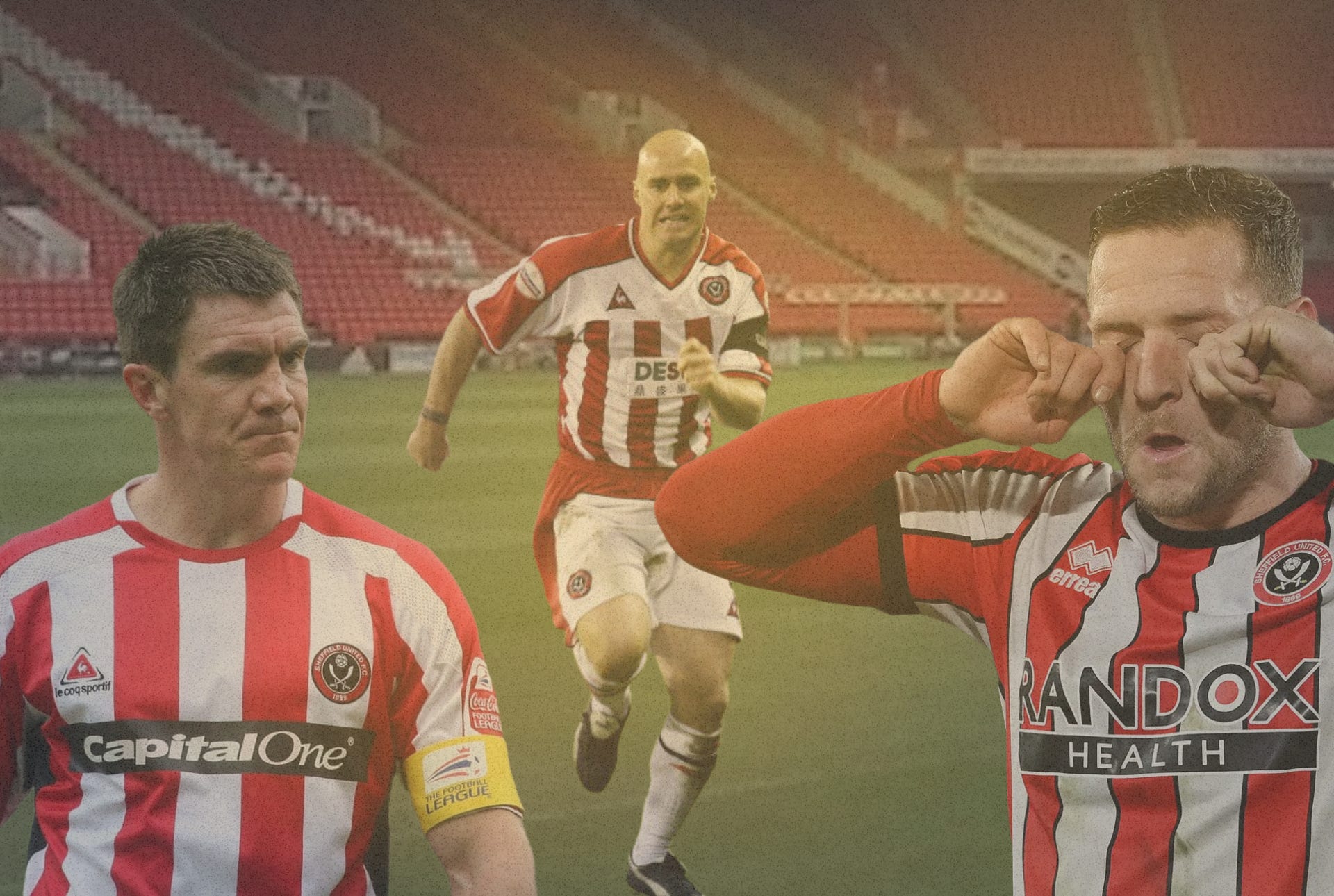
The armband. Is it just a symbol of someone who does a coin toss? Or the crown of an on-pitch leader and team figurehead?
I’ve always been a huge advocate of captains; from the chest-out man-amongst-men, to the quiet stoic, whispering sound advice to those around him on the pitch. I’ve heard it said by many that a captain doesn’t really add that much to a team, and we all know the Van Hooijdonk quote about cats as managers. But football is a low-scoring sport with incredibly fine margins. At the risk of sounding all Sir Dave Brailsford, it’s the marginal gains that do make the difference, so surely a strong leader on the field can only be a net benefit to a team? I’m not a statistical whizz who could drill down into the actual points-benefit of a strong captain, but similarly, you cannot convince me that they have no impact whatsoever.
“If you were to change all the managers in the league for cats, at the end of the season there will still be one champion and three will get relegated. Does that mean the cat who is champion is fantastic and the three who got relegated are sh*t?”
Pierre van Hooijdonk
I’ve had a long ponder on the many men who have worn the armband for United over the years and categorised my musings into three captain personae to add some semblance of structure rather than incoherent rambling. As with most tripartite structures, I’ve gone for the classic shit sandwich – or feedback panini – approach. In each category, I’ll talk through some of my favourites and nod to others who I think suit that label. And to save everyone from an encyclopaedic, Rothmans-style history of the club, I’ve picked sixteen captains over my thirty years of having a season ticket at the Lane.
Captain Style 1: The Stoic Professional
There’s a lot to be said for the captain who quietly goes about their business, moving the game on either through technical ability or calm, stoic presence when the pressure cooker heats up around them. We’ve been blessed with a few of these over the years, each bringing composure and patience when everything around them seems to descend into typical Sheffield United chaos. Japhet Tanganga, our current captain, drops into this category, as while I’ve moaned about him a few times on The Hodcast, I do think he’s a technically gifted player who could lead us for a few years.
Robert Page and David Holdsworth, while not the most technically gifted players (although I did see Holdsworth once score a scissor kick), were calming influences for United when we were knocking around the top end of Division One and the Championship. As centre-backs, they were great in the air and marshalled others in a reassuring way without screaming or thumping the chest. Unsurprisingly, both went into management, with ‘Pagey’ leading Wales to a European Championship and World Cup as manager of his national side.
Gary Speed and Oliver Norwood were fantastic players for United. A bit like Jimmy Anderson for England at cricket, you never fully appreciated what we had until it was gone. Their passing abilities were a joy to watch, as well as that calming presence in midfield, guiding others into position and making everything tick around them.
And I couldn’t leave Phil Jagielka out of this category. What a player. What a man. Calm, cool, classy. ‘Nuff said.
Captain Style 2: The Placeholder (or toss winner)
Typically, as with any memory bias, these gents seem to appear in nightmarish flashbacks to times when the Blades always managed to become Sheffield United, Ruiner of Weekends and Inflictors of Misery on many a Blades household. They also reflect the classic perception from the stands that “there’s no leaders out there”, as the team drifted hopelessly through defeats and poor performances, while the players waved their arms about in frustration with each other. I don’t blame these chaps for our performance on the pitch – but they certainly didn’t help at the time.
Michael Doyle being in this category is controversial, especially after the “cocker-nee walk” at West Ham away, but Doyle was the captain of a terrible group of players at a terrible time. He joined with us struggling in the Championship under Micky Adams and we ended up dropping into League One. These were very dark times: yes there were some great away days, but there were also some incredibly rotten moments. I did like Doyle towards the end of his tenure with us, but he and the many managers we burned through couldn’t lift a broken and poor side out of the doldrums.
Steve Bruce and Jay McEveley are both here for different reasons. Bruce, because he wanted a managerial job so became our player-manager and captain and never seemed really invested in United – although he did take us off the pitch that day at Highbury. Bruce jumped ship to (at the time) big spenders Huddersfield Town, with United in limbo and the usual meltdowns in the boardroom blighting us. McEveley is in this category simply because he wasn’t very good, both as a player and as a captain. Indeed, the alarm bells sounded for KPI enthusiast Nigel Adkins the minute he named McEveley captain.
In the cases of Anel Ahmedhodžić and Vini Souza, they got the armband for being big characters in the dressing room and for being among the better players. But both showed their frailties when the chips were down and desperate fans and teammates needed a Michael Jordan Superman to throw them on their back and carry us home. Neither were great captains, but fantastic players (apart from THAT season in the Premier League, which we don’t talk about).
Captain Style 3: The Personification (Mr Sheffield United)
This category doesn’t need an introduction, as it’s the men we all want to be and who you think of when you think of Sheffield United. I have only one controversial name in this category, and it’s Jack Robinson. I’ll get him out of the way first. I wasn’t a huge Robinson fan, as I thought he was an average championship centre-back with too many mistakes in his game. However, you could never question the man’s passion, even on that night in Birmingham when he tried his best to get sent off.
I’ve paired Ollie Arblaster and John Egan, as they’re not at the same level as the next two club legends, but they still exemplify what a fan wants from a player. John Egan was the closest we have had to a leader at the back since Chris Morgan retired. Egan was the (possibly underrated) defensive solidity, discipline and leadership that complemented the eye-catching overlapping exploits of Jack O’Connell and Chris Basham either side of him. Ollie Arblaster is a fantastic player, and when he fully recovers from his injury, he will be a superb leader and ambassador for (hopefully) years to come.
Finally: Billy Sharp and Chris Morgan. The words ‘Club Legend’ are thrown about too easily. But these two are simply that, and I cannot do them justice in this one piece. Natural leaders who ran through brick walls and told everyone to grab onto the cape as they carried fans and players alike through good times and bad. If you were in a foxhole on a battlefield, they’re who you’d want with you.
Whether they were stoics, placeholders or legends, these men prove that the armband is never just about winning a coin toss. In the words of Al Pacino in Any Given Sunday, “The inches we need are everywhere around us.” A good leader will not only “fight and die for that inch,” but will inspire others to do the same.
What a very thoughtful article, Matt.
You've really hit the nail on the head, there - between, shall we say, "the good, the bad and the leaders", all I can say is 'hear, hear'.
"Natural leaders who ran through brick walls and told everyone to grab onto the cape as they carried fans and players alike through good times and bad. If you were in a foxhole on a battlefield, they’re who you’d want with you." Yes, absolutely!
Sue.