

Alec Hawley
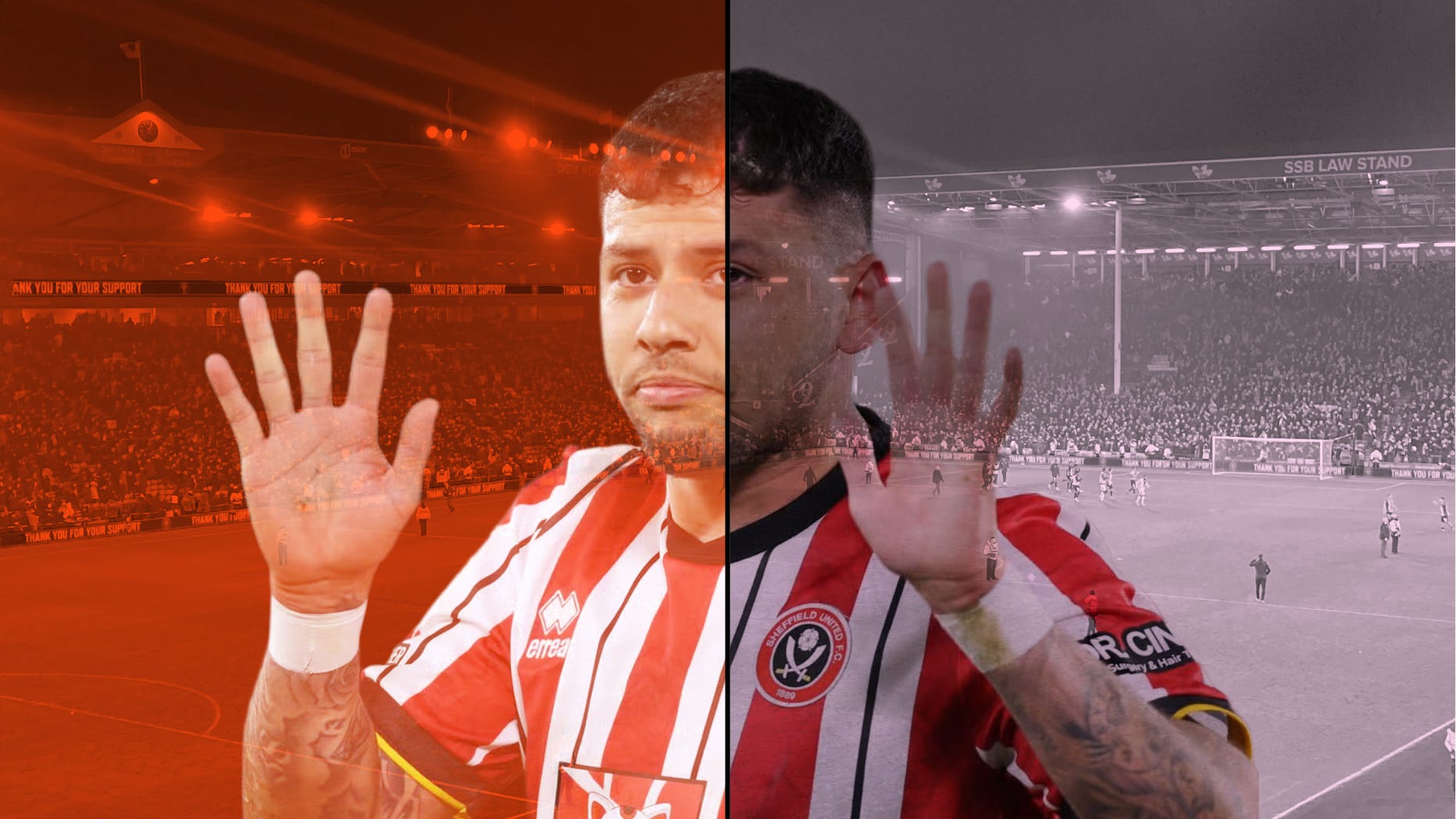
Now that the wonderfully gifted Gus Hamer has taken his cheeky smile, stunning goals, and exquisite assists back to Coventry City, the Blades have 2 big problems to solve - who will occupy the Hamer zone on the left, and who will replace his creativity and output (17 GA last season and 16 GA in the one before).
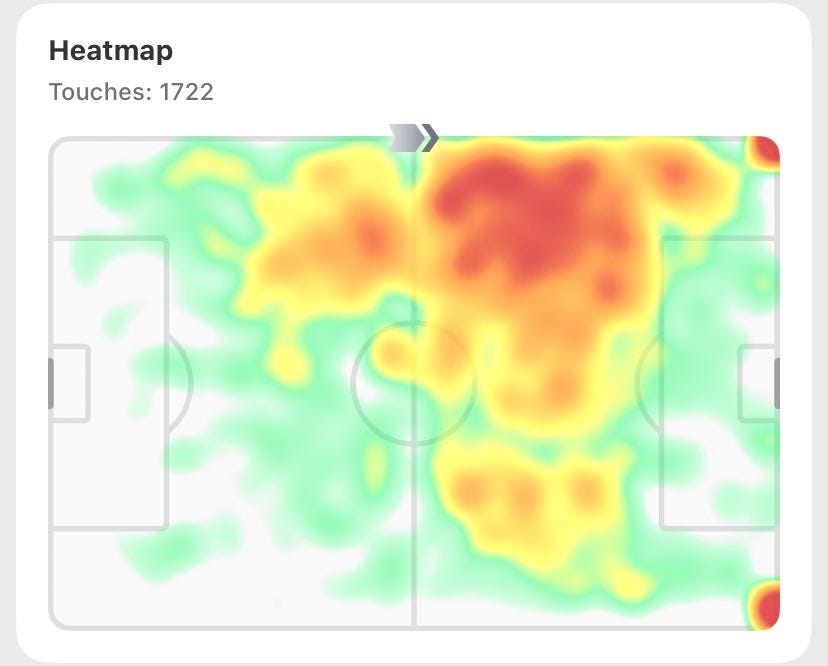
Of course, as that shows, Hamer was never really a winger on the left of the 4-2-3-1 in which he generally excelled. Instead, he’d cut in on his favoured right foot for shots, pinpoint crosses, and precise through balls, leaving the wing free for the left back (generally Harrison Burrows or Sam McCallum) to surge forward. He had a particularly good relationship with Burrows, another technically gifted passer whose quick feet and quick brain matched Hamer’s.
The £6m rising to £8m reported fee for Hamer didn’t really reflect his talismanic importance to the side, but was a reasonable sum for a 29-year-old in the last year of his contract.
However, even in the best circumstances, replacing Hamer at that fee is extremely challenging.
And we are definitely not in the best circumstances.
So, while Chris Wilder and co. apparently search for a left winger on loan to add a spark to this team, let’s take a look at what we’ve done in the two league games since Gus left.
Against Birmingham City, Wilder went with a 4-4-2 with Callum O’Hare on the left. As always with O’Hare, he worked incredibly hard without the ball (even winning a header against a Birmingham CB at one point), but he struggled to really impact the game out wide. It’s no surprise that his best moment - the driven through ball that set Patrick Bamford through for the Blades’ only clear-cut chance - came when O’Hare found himself in a central area.
O’Hare doesn’t possess Hamer’s passing range, doesn’t really excel taking on a fullback 1v1, and doesn’t really cross, so sticking him out there doesn’t really work.
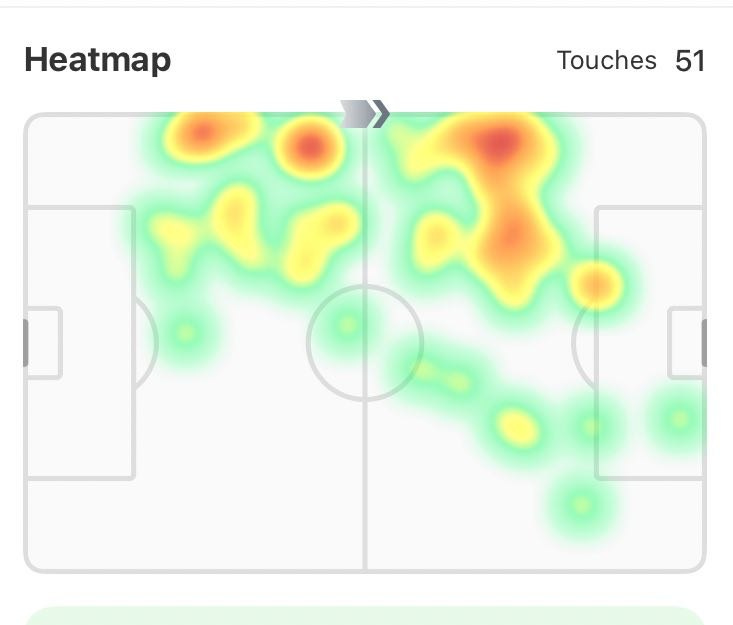
Yes, he can, in Wilder’s words, “do a job” on the left, but playing him there neutralises the strengths of arguably the best attacking player at the club.
Regardless, while the defence was solid, the attacking numbers were damning - 3 shots in 94 minutes, 1 on target, and a paltry 0.29 xG.
Something had to change and, perhaps spurred by injuries to Ryan Oné and Tahith Chong, Wilder went back to the future for the trip to Swansea City.
The back 4 was out, and in its place came a sort of 3-1-4-2 (technically a 3-1-2-2-1-1) that had Joe Rothwell sitting in front of the back 3, Femi Seriki and Harrison Burrows flying forward as wing backs, Oliver Arblaster and Sydie Peck playing as attacking 8s, and O’Hare playing off Patrick Bamford as a second striker.
To facilitate all this, McCallum shifted from his usual left back role to an overlapping left centre back, and looked remarkably comfortable there.
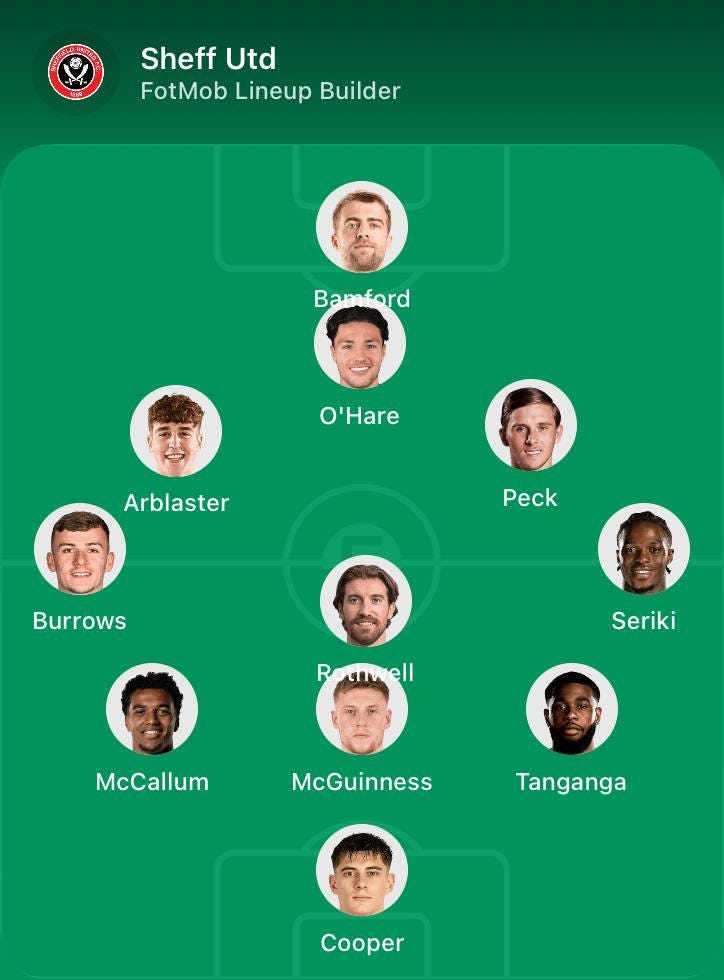
This produced another 0-0, but while the defensive solidity remained, the Blades became a much more potent attacking force, improving from:
3 shots to 12
0.29 xG to 1.46
1 shot on target to 2 (this is less impressive admittedly)
And O’Hare came agonisingly close to scoring the first Blades league goal of the new season when he bustled into the box, the ball fell to him and he hit a lovely half-volley that resounded off the bar.
While that was his only shot, he felt far more involved throughout and this central role meant he was often our most advanced player without the ball, leading the press and harrying the Swans.
The Hamer zone was filled by a combination of Sydie Peck and Harrison Burrows, with Burrows in particular showing some of the technical ability that made him such an exciting player two seasons ago (92 points and all that).
Now this switch hasn’t suddenly solved everything - O’Hare hitting the bar 39 minutes in was United’s first meaningful shot on goal, and the whole thing is clearly a work in progress.
And it will have winners and losers too. It’s hard to see where Romelle Donovan - the 19-year-old right winger who joined on loan from Brentford as a replacement for homegrown star RW Andre Brooks - fits for example.
But Wilder has successfully switched system to suit personnel before; 4-2-3-1 was adopted in the first place to get Hamer and O’Hare in the same team.
And this latest switch feels a much better fit for our best players. As well as Burrows and Peck combining down the left, Arblaster and Seriki did the same down the right, Rothwell used his passing range to dictate from deep, and McCallum played LCB like he’d done it all his life.
As these relationships get more developed and the players become more confident, this feels like it really could become a viable path forward in a post-Hamer (and post-Brooks) world.
Assuming that is the case, how does that affect our recruitment? Are we really going to sign a left winger for a system that doesn’t suit one, or will we instead look for a natural backup/competitor to Bamford in the targetman role? CB is still a clear priority, and Cannon has been linked with a sale; could that free up funds for an actual permanent signing?
Maybe we don’t need to replace Hamer at all?
Or maybe Wilder will return to an old favourite, Ben Brereton Diaz or BBD as he’s known to most of the football world. He’s already had 2 spells at the Lane, first being far more effective in the PL than anyone expected (7 G/A in a Blades side that already felt doomed when he arrived in January 2024) and then underwhelming when he joined a United side battling for automatic promotion in January 2025 (also 7 G/A but in a team that was dominant rather than struggling).
But if you’ve forgotten, he’s a very different player to Hamer; in fact it’s slightly ludicrous they play the same position.
More than anything, BBD wants to get in the box and score and what he lacks in technique and creativity, he mostly makes up for with powerful running and some explosive finishing.
If BBD does join the Blades for the third time, it might signal Wilder preferring a more direct style now his long-time assistant Alan Knill has departed, and there have definitely been signs of this against both Swansea and Birmingham.
BBD’s versatility may also appeal to Wilder as he can play right wing, left wing and up front. If part of the answer to replacing Hamer is greater tactical flexibility and frequent switches between 4-4-2, 4-2-3-1, and 3-1-4-2, then you can see why BBD might be in line for yet another return to the Blades.
One thing’s for sure: what happens next will be fascinating.
Thanks Alex and this is the Gaffer’s biggest challenge.
We saw enough from Donovan at Blackburn to evidence the impact he can have on the right.
If BBD joins us it will provide both balance and open up options.
Both players have high energy, work rate defensively and the capability to play 90 minutes.
Thanks, Alec.
"As these relationships get more developed and the players become more confident, this feels like it really could become a viable path forward in a post-Hamer (and post-Brooks) world." I think you've got it in one there; they just need to 'gel' together and play in their "proper" positions - remember Chris Basham?
As you say, it will be fascinating indeed.
Sue.